Stars, Wars, and Shaheed Drones

The sun comes out on a Saturday morning, drenching all in bright lemony light, as I walk with a group of locals to the Astronomy Museum of the Kharkiv University. The guides are young and visibly nervous, showing the monument to the poet Taras Shevchenko and only then realizing it is covered with sandbags,
“Well, if there weren’t these sandbags…” - they say. But there are sandbag, and sirens, and the methodical pum-pum-pum of the air defense trying to shoot down a swarm of russian iranian drones somewhere to the north. One of such drones is hitting an airport in Kuwait at the same time.
Two ladies with grandkids whisper loudly, “well, should we go to the metro if it says the shaheed flies to us?” - but their grandkids are already far in the beginning of the procession, sneaking through the museum gates.
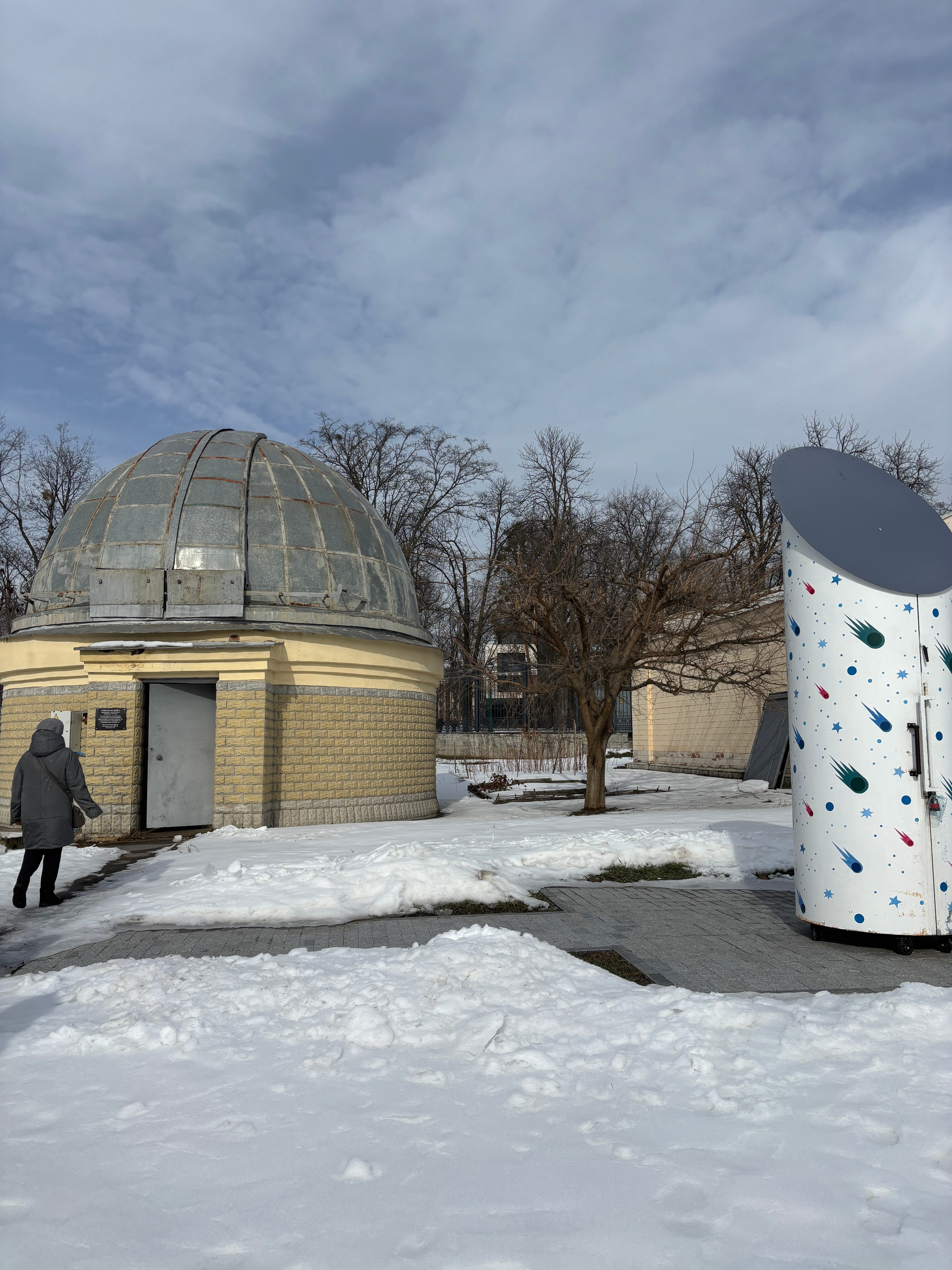
We walk past a series of round buildings that hide antique 19th century telescopes. Air defense continues spitting charges into killer drones.
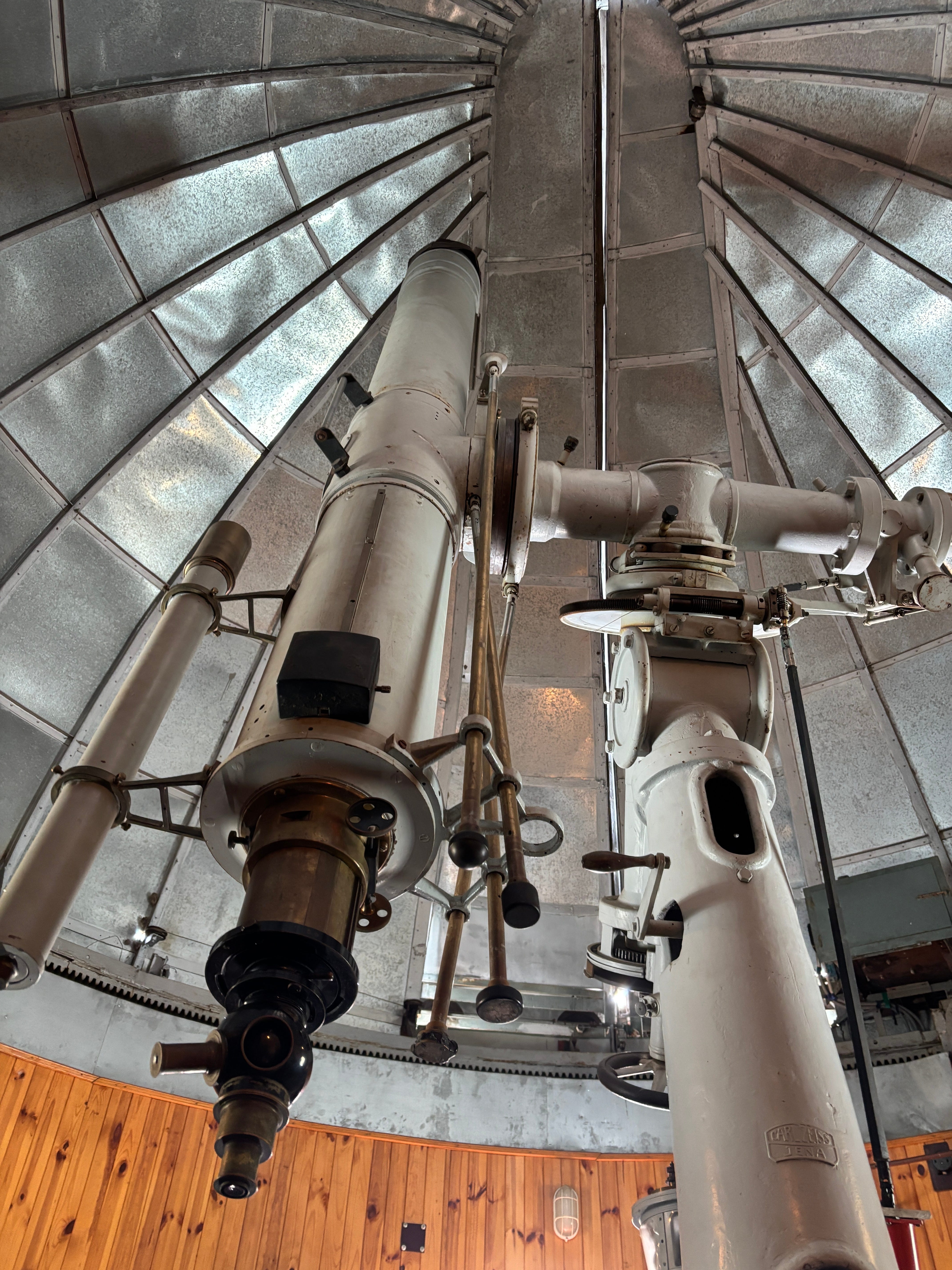
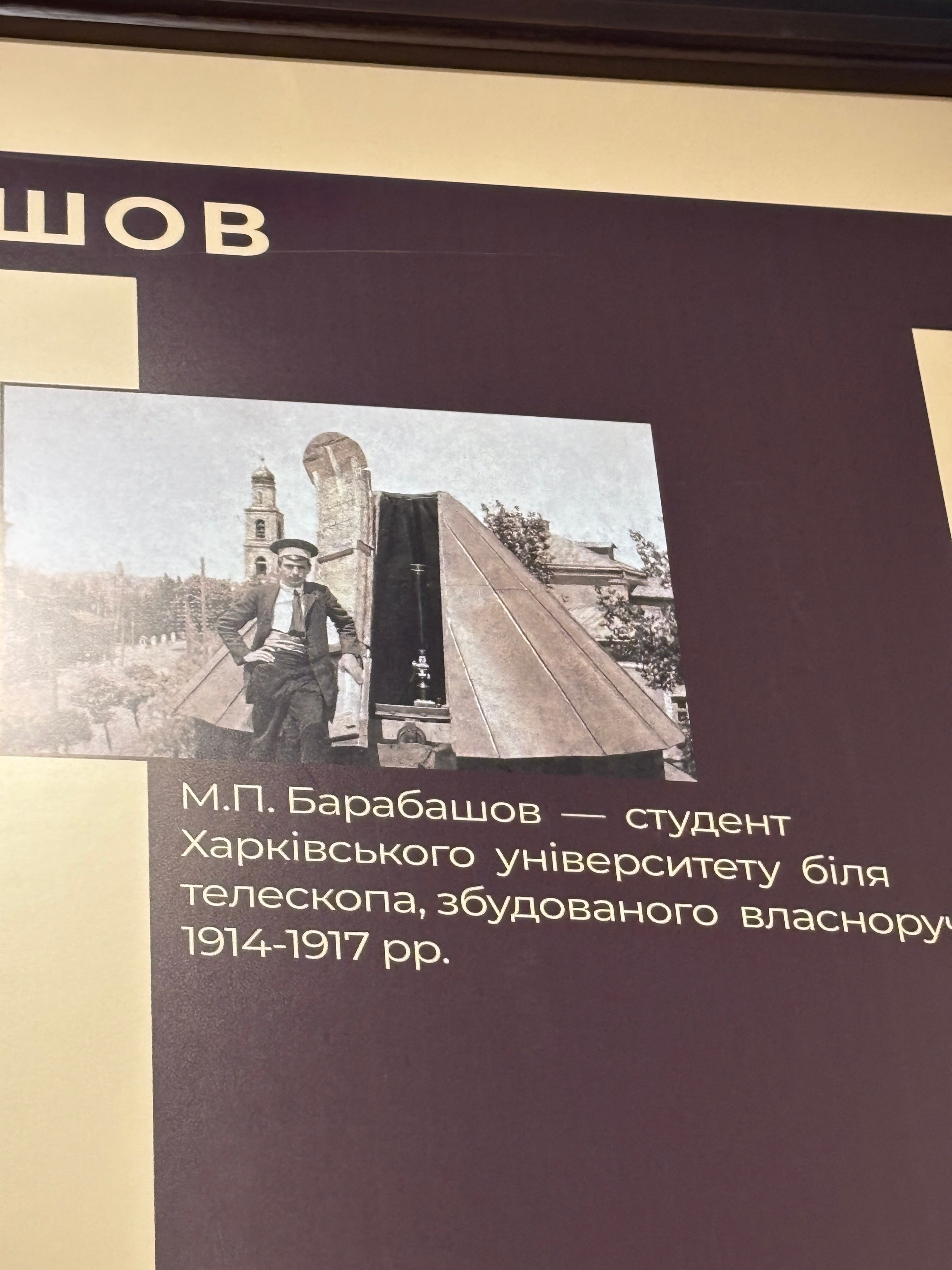
We walk to the 1920s telescope booth and immerse into the daring age of discovery.
Here the famous Ukrainian astronomer Mykola Barabashov worked with his class. He is known for drafting the map of the other side of the moon, and for being the university rector during WW2.
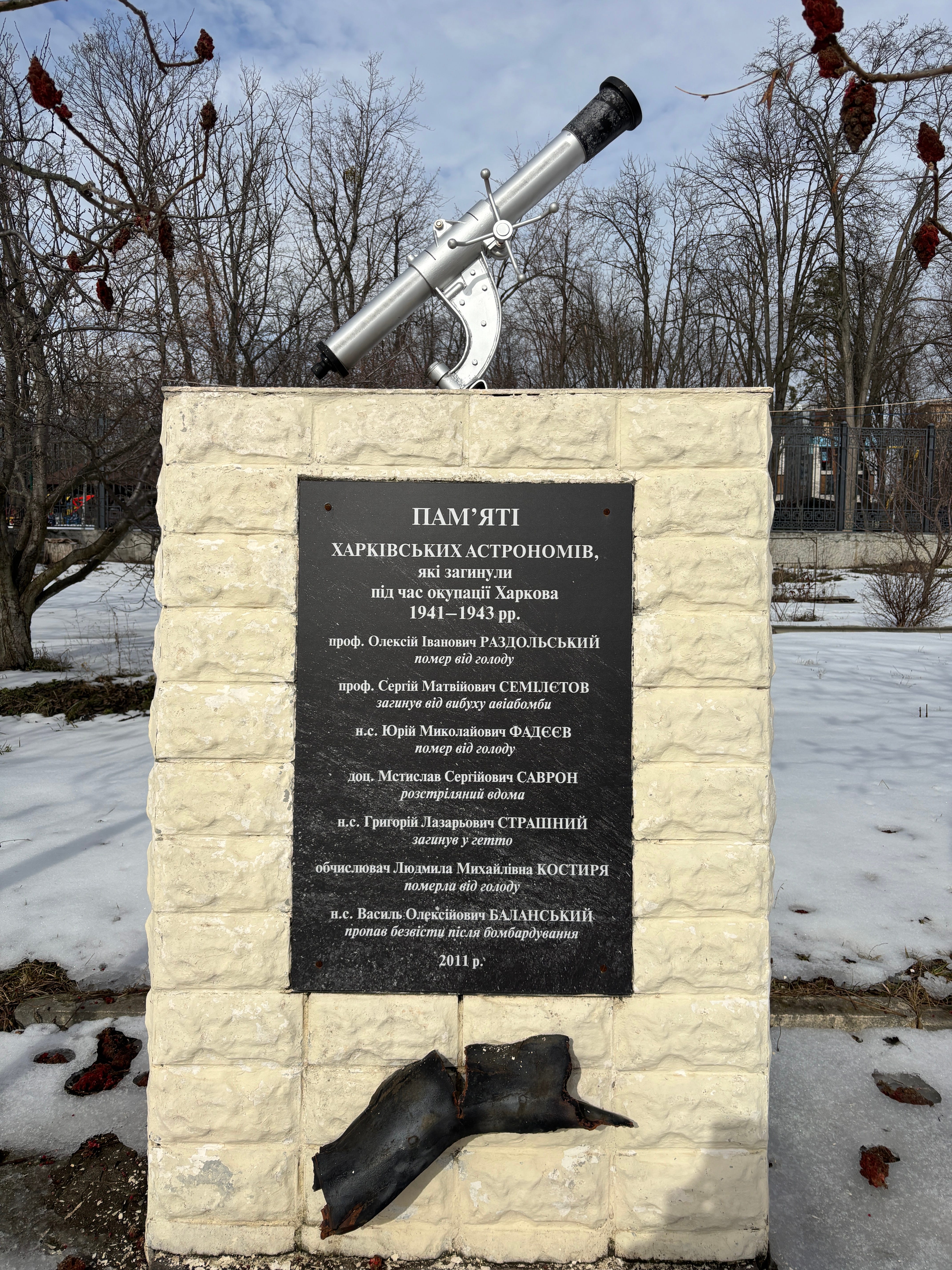
Just outside Barabashov’s favourite spot is a monument to the employees of the research institute who were killed during WW2. Most of them starved, were executed or hit by bombs under the Nazi occupation in 1941-43.
Barabashov himself was lucky to be evacuated to Kazakhstan with part of the institute’s equipment. He undertook a complicated mission of renewing the work of the institute and the entire university after 1943. Most of the astronomy museum exhibits were destroyed during WW2.
Inside of the main building of the museum, alongside what was left from the previous war, in the library, one stand is dedicated to a more recent occupation. As there is a metro under the institute’s territory in Kharkiv, stargazing is very limited. The most of the research has been conducted outside of Kharkiv at a station near Chuguiv. That station was occupied for several months in 2022 by the russian military.
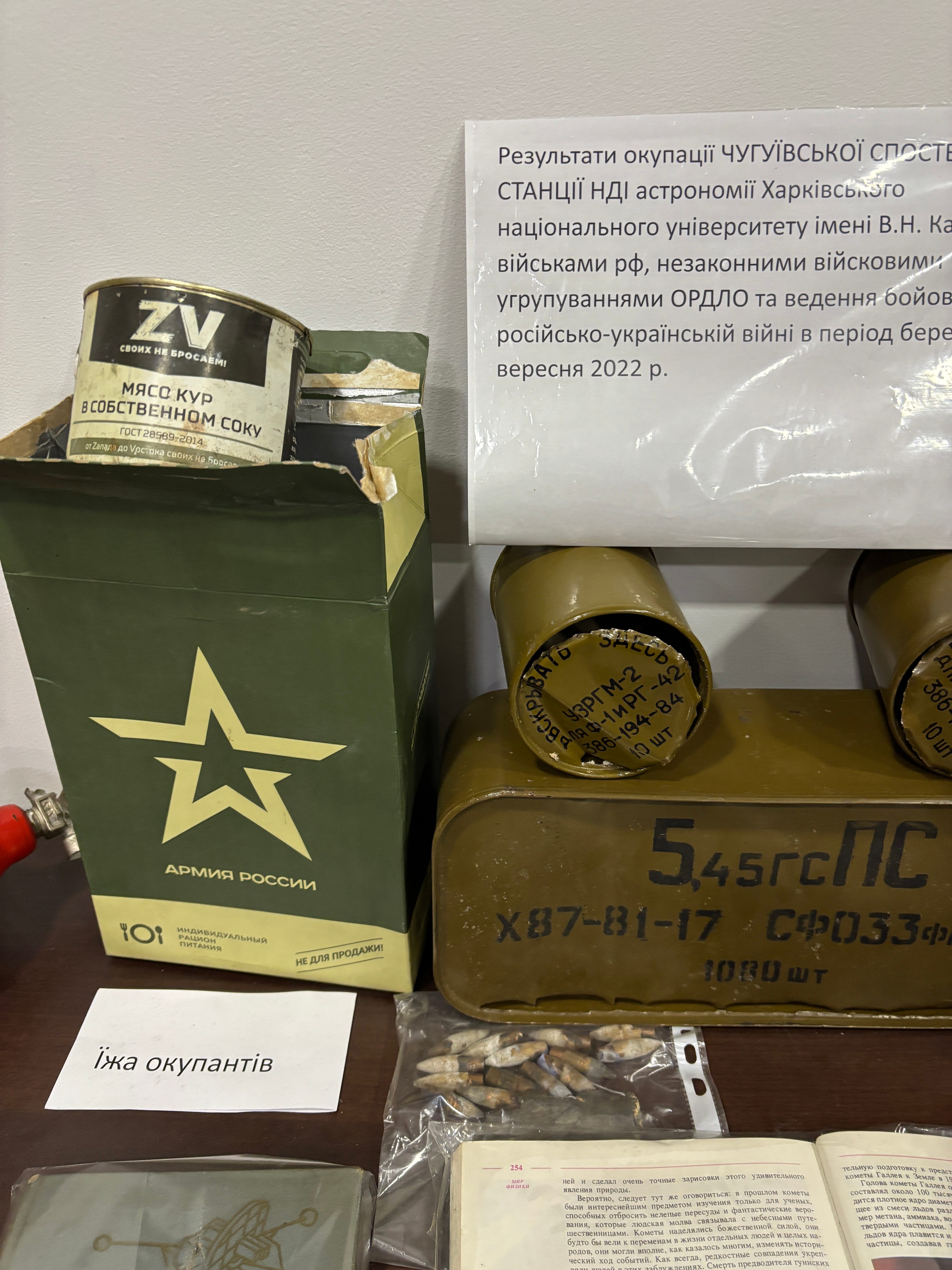
They used the station as a shooting range and quarters, training to shoot into books and telescopes.
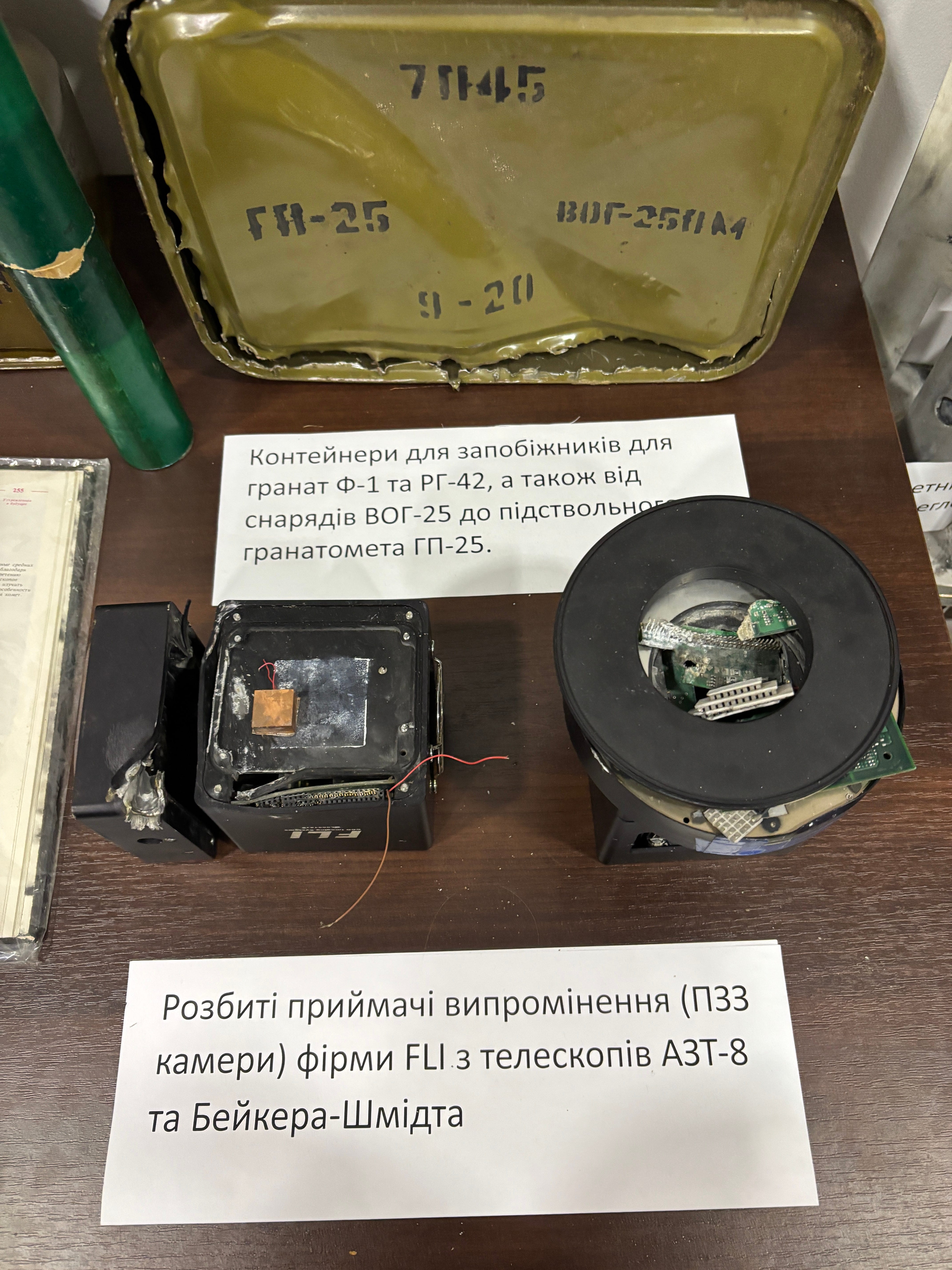
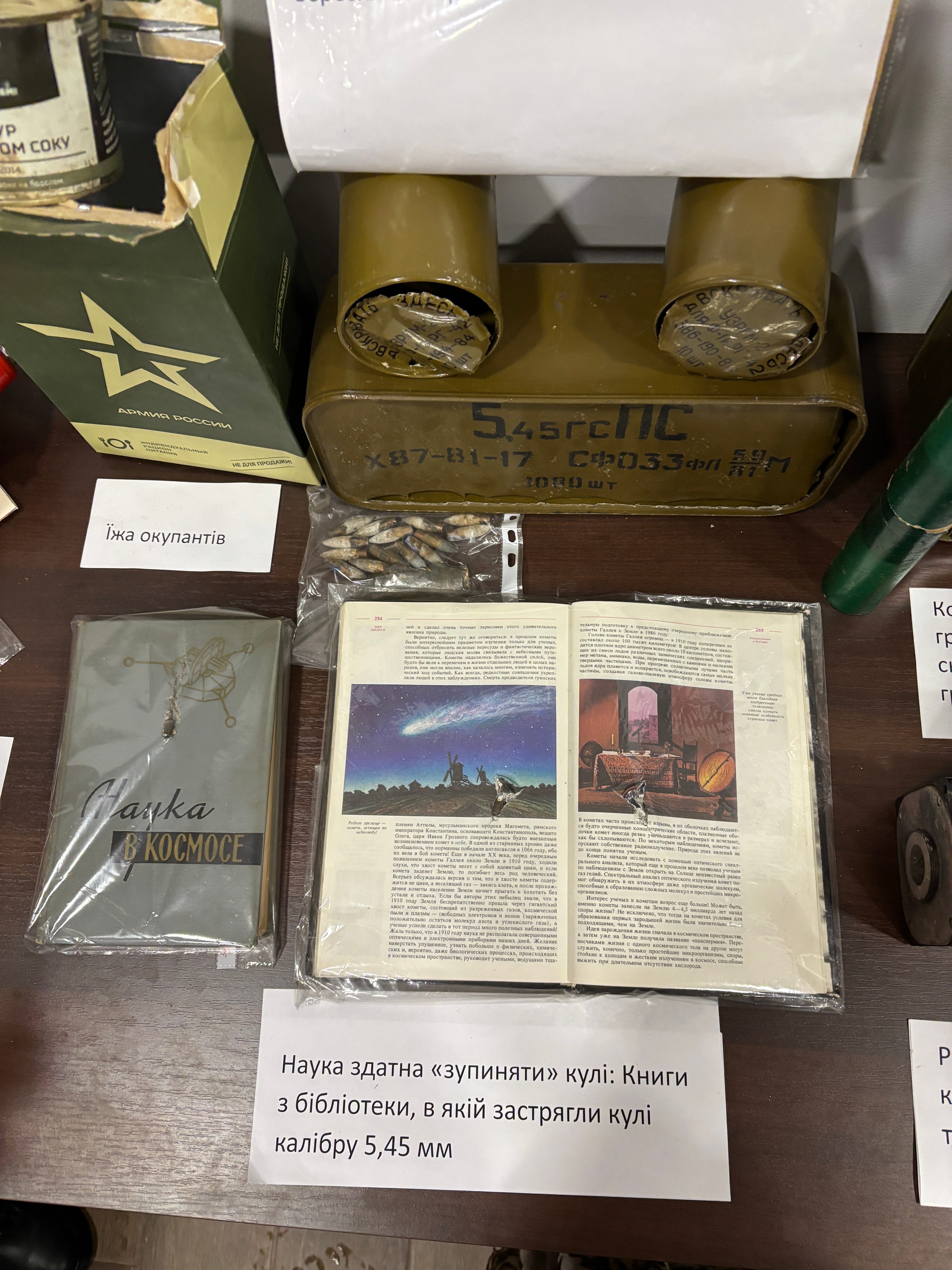
The work of the station hasn’t been resumed still, as it is quite dangerous to work near the frontline.
Between the daring desire to travel to the stars, and the need to self-archive and self-preserve, the museum tries to find a balance.
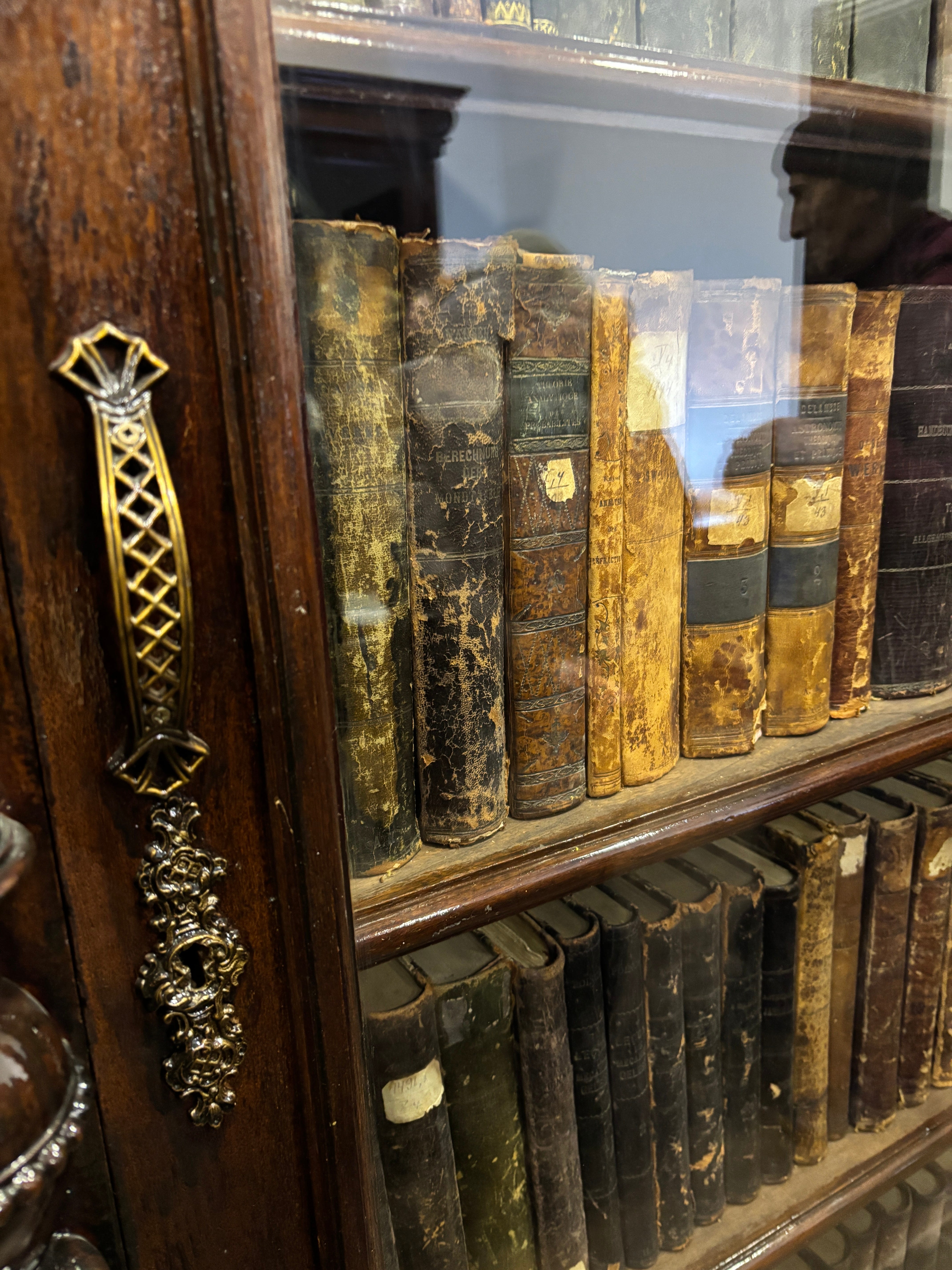
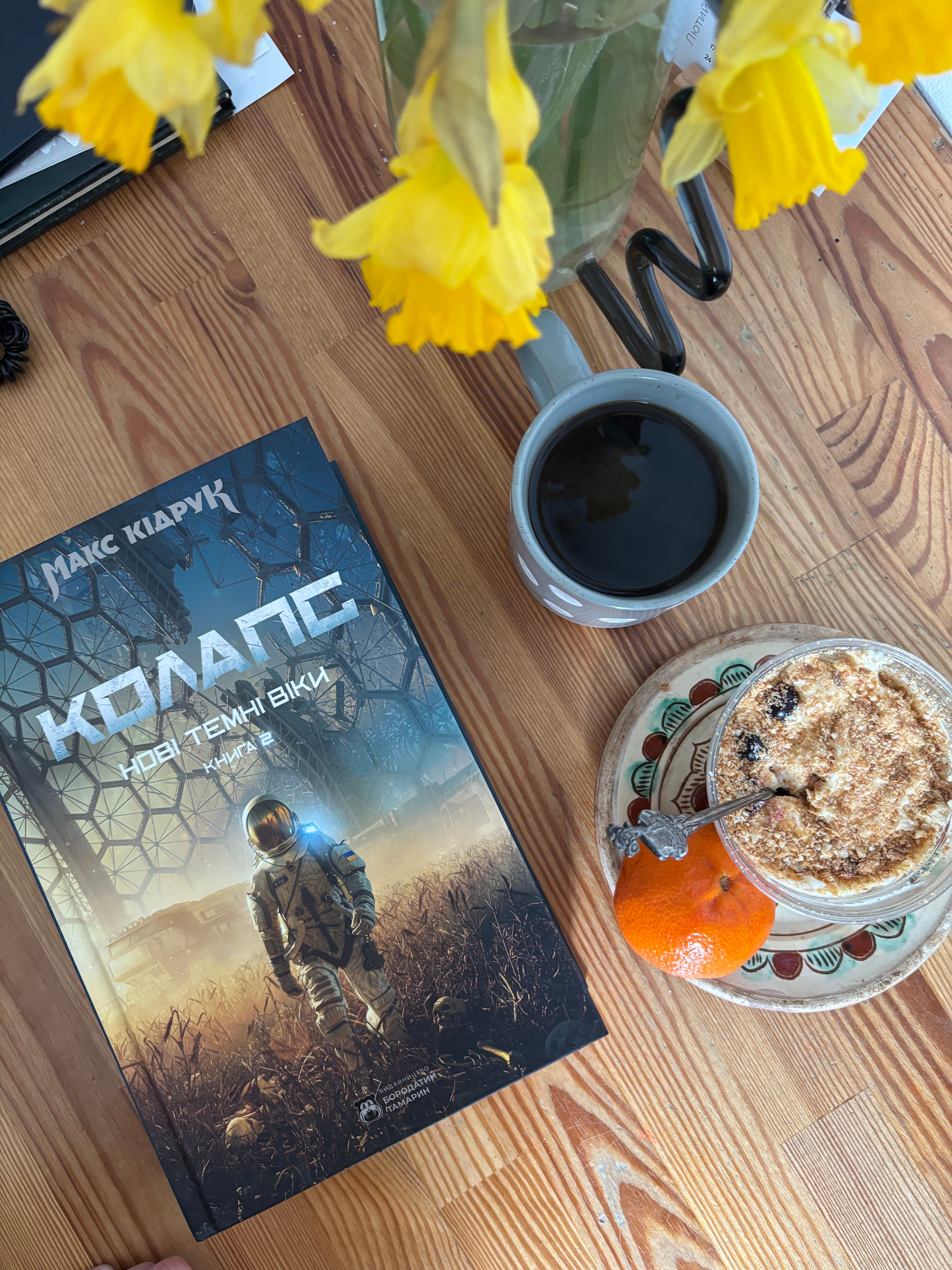
Old and new live near. When I walk out into the daylight again, a message from the Nova Post delivery says that the 2nd volume of the long-awaited Ukrainian sci-fi by Max Kidruk has arrived. I go home to read about Ukrainians trying to settle on Mars as russians are secretl delivering heavy weapons, to the red planet this time.
I am so glad you enabled the children to see the inside of this very important Ukrainian public building VIKTORIIA! Thank you for making it possible.This memory will stay with them forever.SLAVA UKRAINI ! 💛💙💪